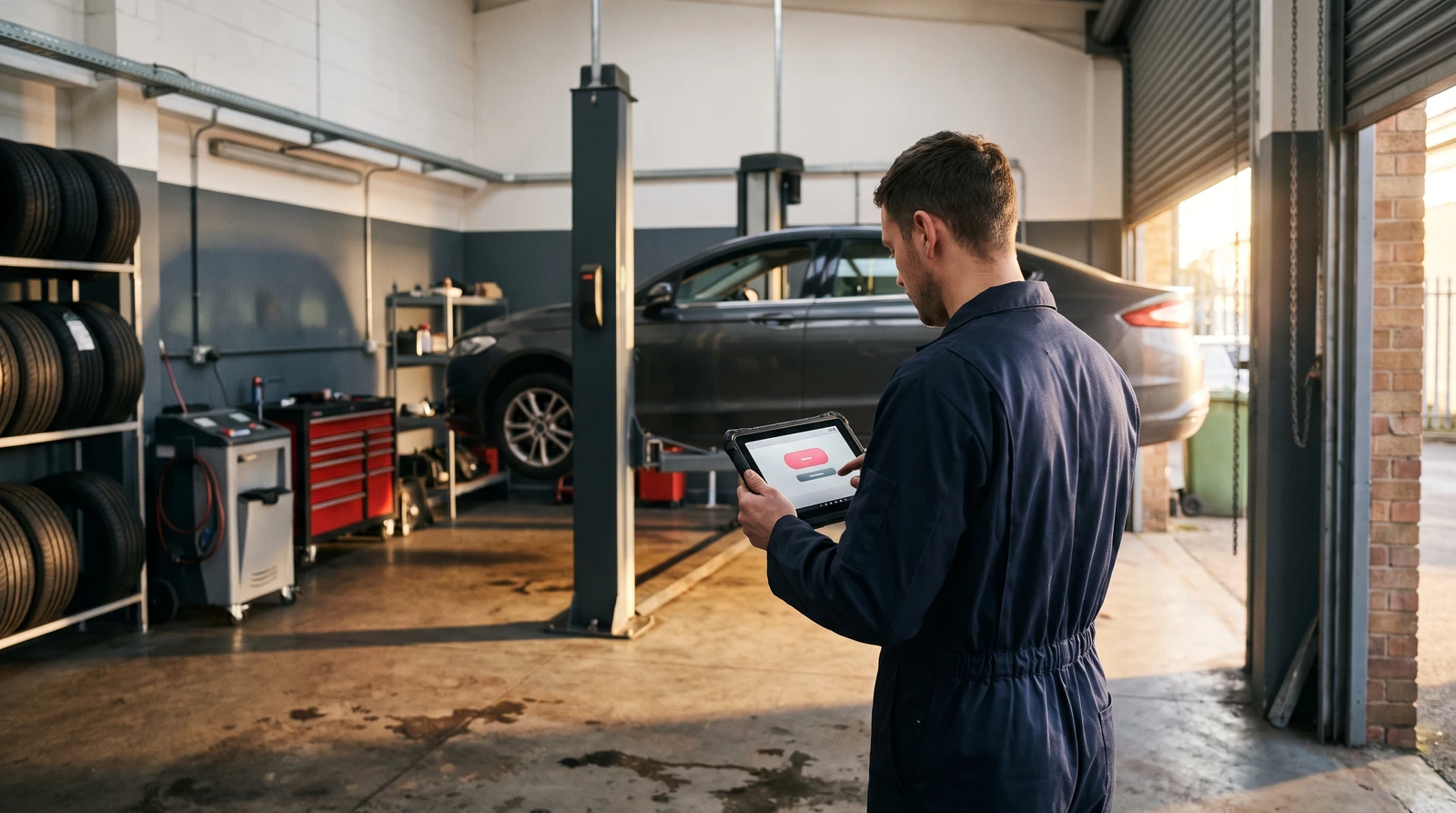
A garage’s real problem is rarely this week — it’s next week. Today’s bays are full because of jobs booked a fortnight ago; the quiet Tuesday three weeks out is the one that costs you. Word of mouth built your garage and always will, but it cannot fill a gap in the diary on demand, and it cannot reach the driver whose car has just failed its MOT and is typing your town into Google right now. Digital marketing is simply how you reach that driver, earn their trust before they ring, and make booking easy. This is a plain-English guide to what actually works for an independent UK garage — your website, local search, reviews, paid ads, the reminder cycle and social — and how to tell which parts are worth your money. We come at it as people who run our own automotive workshops, so it is grounded in how a garage really fills its bays.
Where garage customers come from now
Ask most garage owners where their customers come from and the honest answer is “word of mouth”. That is still true and still a strength — a recommendation from a neighbour is the warmest lead there is. What has changed is what happens next. Before that driver rings, they look you up: they check your reviews, glance at your website, and see whether you do MOTs. The recommendation opens the door; your online presence decides whether they walk through it.
And many potential customers never get a recommendation at all. When a clutch goes on the school run, or a warning light appears the night before a long drive, people do not ask around — they search. “Garage near me”, “MOT [town]”, “car making a noise when braking”. Whoever shows up, looks trustworthy and is easy to contact gets the call. Being that garage, consistently, is what the rest of this guide is about.
Your website should take bookings, not just look tidy
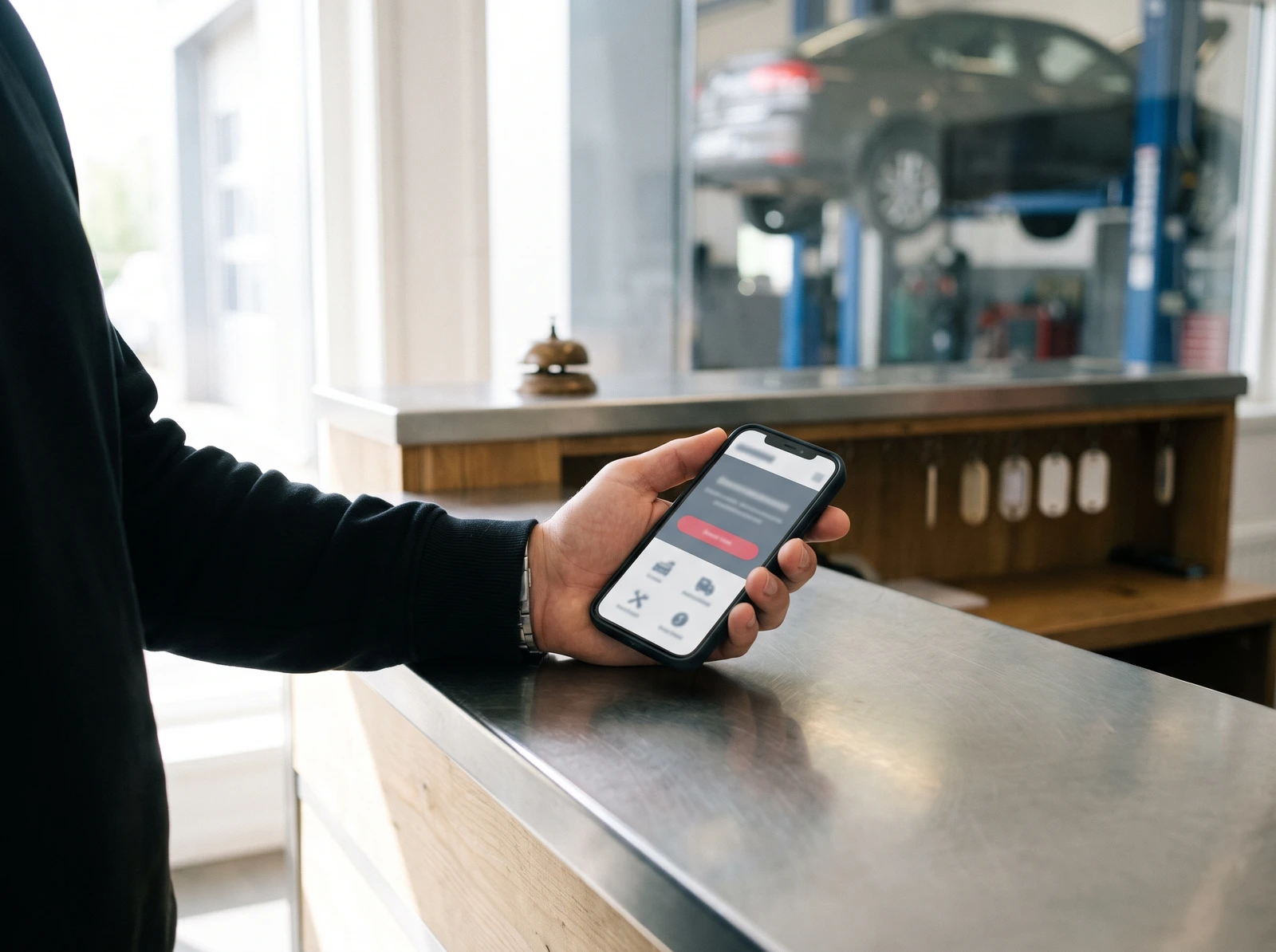
Everything else you do sends people to one place: your website. It is the part of your marketing you fully own, and for many garages it is where the work quietly leaks away — a site that hides the phone number, loads slowly on a patchy signal, or never makes clear whether you even do MOTs will lose the customer your reviews and ranking worked to win.
A garage website does not need to be clever; it needs to do a few things well. Load fast and work on a phone first, because that is where nearly all your customers find you. Make the phone number tappable on every page, with a simple way to request a booking or quote — not a ten-field form. State plainly what you do (MOTs, servicing, diagnostics, tyres, air-conditioning, the makes you know best) and the areas you cover. And carry the trust signals a cautious driver looks for: real photos of the workshop and team, your reviews, and any accreditations you genuinely hold. We build websites and WordPress sites in-house on UK-based servers with UK-based support, and active SEO clients get that hosting free for as long as they are with us. There is more on our web development page.
Getting found in local search — a garage’s biggest lever
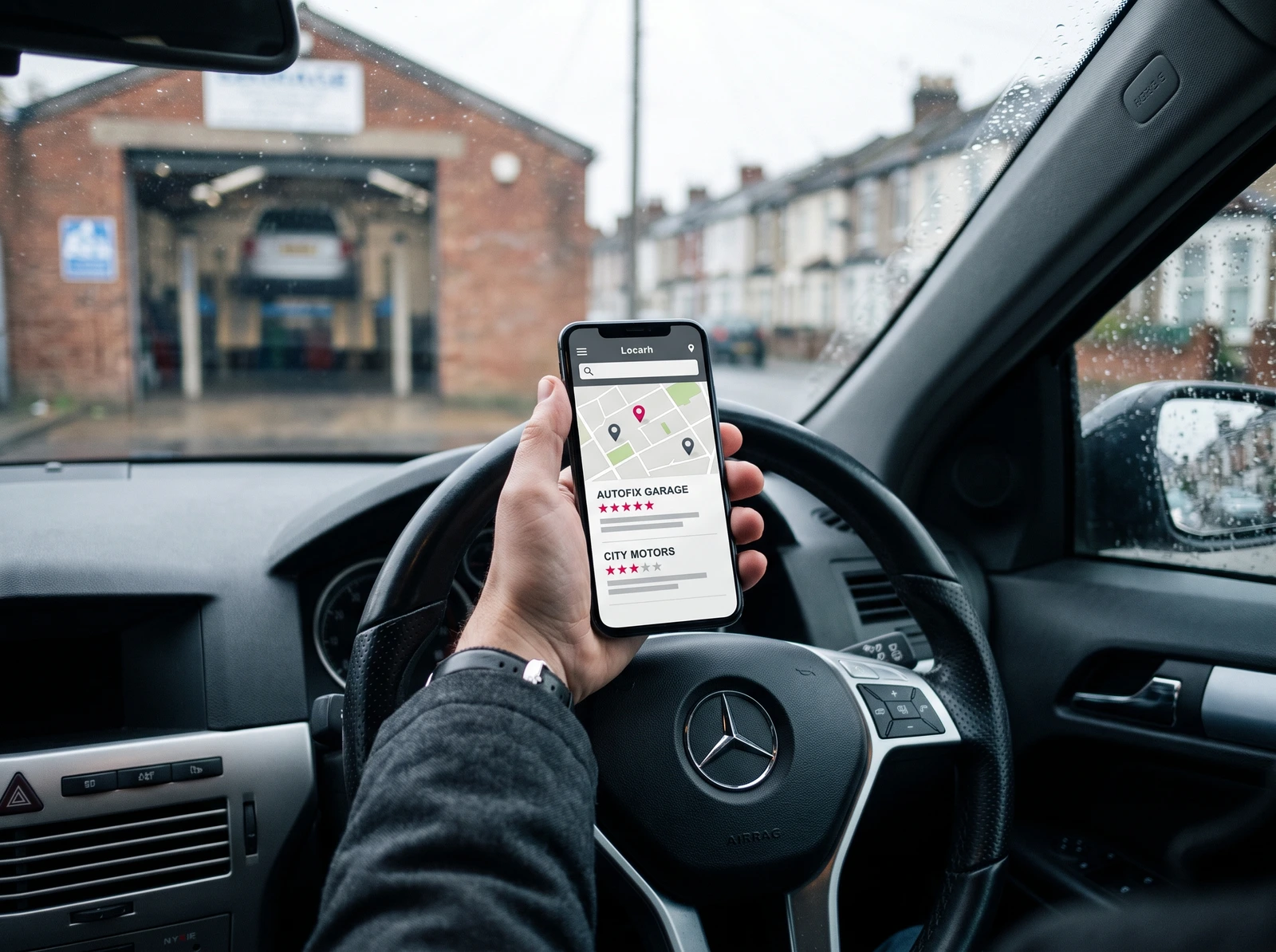
For most garages, local search is the single biggest lever you can pull. When a driver searches “garage near me” or “MOT in [your town]”, Google leads with a small map of nearby garages and their star ratings, right at the top of the page. Appearing there, and just beneath it, is where the bookings are — because that is the exact moment someone has decided they need a garage and is choosing which one to call.
The foundation is your Google Business Profile — the free listing that puts you on that map. Claimed, complete and kept current (correct opening hours, your services, address and phone number, recent workshop photos), it does a surprising amount of heavy lifting. Your website then needs to reinforce the areas you serve and the jobs you do, so Google connects your garage to local searches. This local visibility is one of the main things we set up and improve for garage clients, because a garage lives on local demand in a way many businesses do not — and it sits alongside, not instead of, ranking for the specific services drivers look for. Our SEO services page explains how we approach it.
Reviews are your trust currency
Reviews are a garage’s currency of trust, and they do two jobs at once: they lift how prominently you appear in local results, and they are often the deciding factor between you and the garage down the road. Drivers are wary of garages — the fear of being overcharged is real — so a wall of recent, genuine reviews wins a nervous first-timer better than any advert.
The garages that win at reviews make asking part of the job — a friendly request when the customer collects the car, a follow-up text with a direct link, or a QR code on the counter, rather than hoping people remember. Reply to every review, good or bad; a calm response to a complaint reassures the next reader more than a perfect score with silence. And never buy fake reviews — they are easy to spot, against the rules, and corrode the trust you are building.
When paid ads are worth it for a garage — and when they aren’t
SEO compounds over months; paid ads — Google Ads, mainly — buy visibility today. That makes them genuinely useful for a garage in the right circumstances, and pointless in the wrong ones. The honest answer to “should my garage run ads?” is: sometimes.
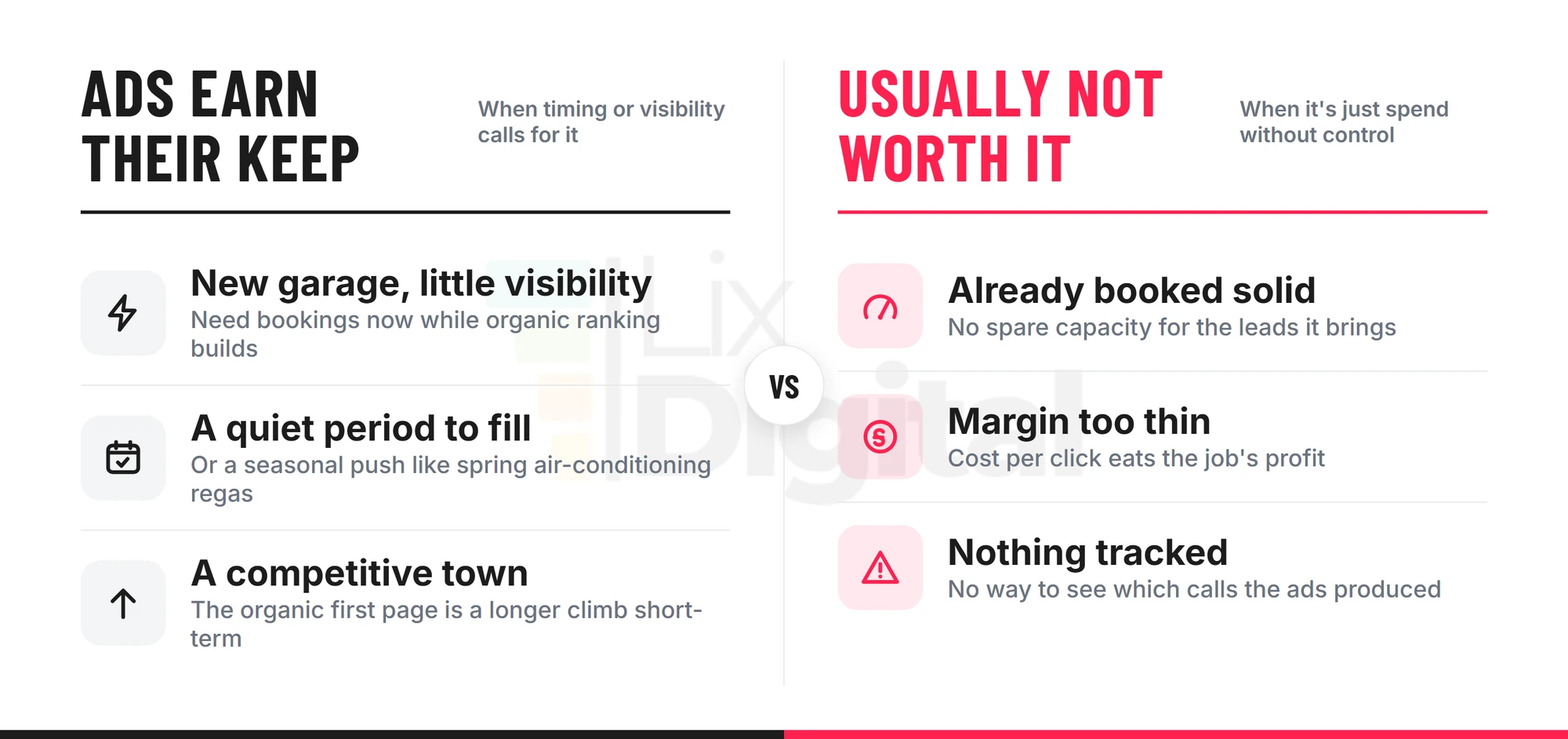
Ads earn their keep when you are a newer garage with little organic visibility and need bookings now; when you want to fill a specific quiet period or push a seasonal service like air-conditioning regas in spring; or when your town is competitive and the top of Google is hard to reach organically in the short term. They are usually not worth it when you are already booked solid, when the margin on the advertised job is too thin to cover the cost per click, or when nothing tracks which calls the ads produced — spending money you cannot measure is how garages decide “marketing doesn’t work”. We recommend paid ads only where they fit your goals and margins, and manage them so every pound is accountable. Our PPC management page covers how we run them.
The reminder cycle: turn one MOT into years of bookings
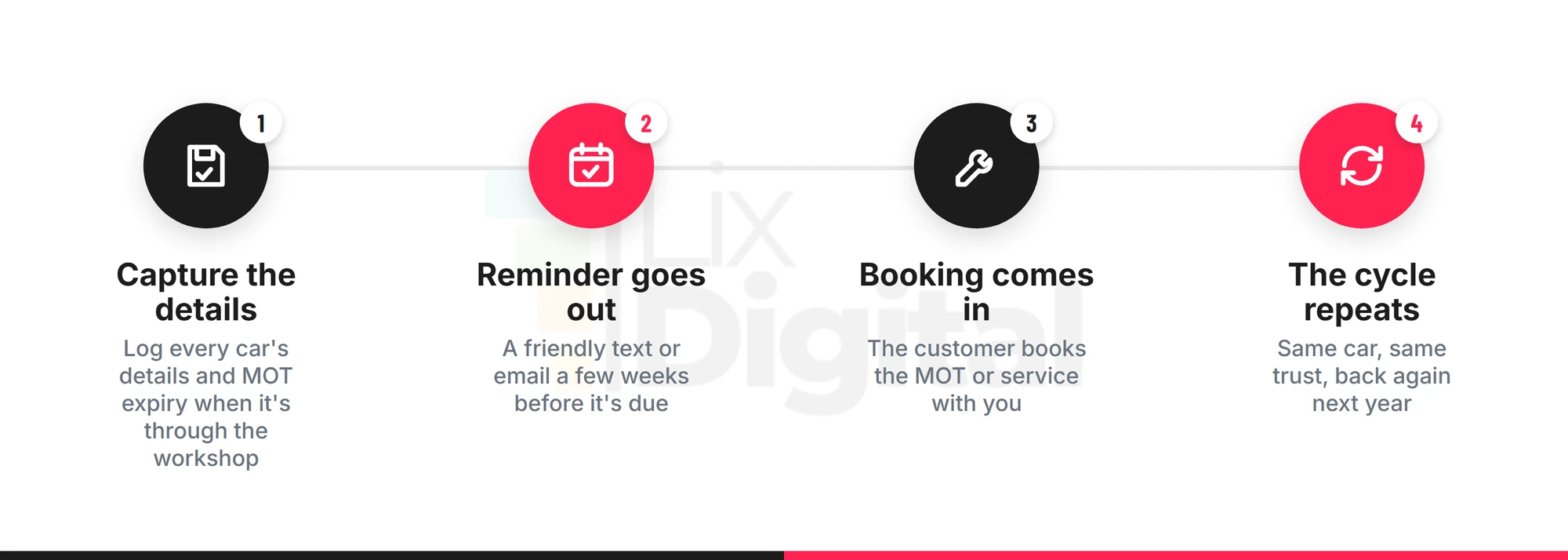
Here is the advantage most garages sit on and never use: your customers are legally required to come back. Every car needs an MOT once a year, a service at set intervals, and a steady drumbeat of tyres, brakes and batteries in between. That makes garage marketing unusual — much of your future revenue is already predictable, if you simply stay in touch. The mechanism is a customer database and a reminder system: capture the details and MOT expiry of every car through the workshop, then send a friendly text or email reminder a few weeks before it is due. It costs almost nothing, reaches people who already trust you, and turns a one-off repair into a customer who returns every year.
We run exactly these cycles in our own automotive businesses — ECU Repairs, Turbo Repairs and Bodyteq are ours, not clients we picked up along the way — so this is not theory to us. We have tested what reminder wording gets acted on and what gets ignored, and we bring that to the garages we work with. A booked reminder is the cheapest, highest-return marketing a garage has.
Social media for a garage, kept realistic
Social media worries a lot of garage owners, usually because they picture having to become entertainers. You do not. For a garage, social media is proof more than promotion — a tidy before-and-after, a quick clip of the team, an honest tip on prepping a car for its MOT, a genuine thank-you to a regular. That builds familiarity and keeps you front of mind for when something goes wrong.
Pick one or two platforms your customers actually use — usually Facebook, where local communities and recommendations live, with Instagram a useful second for visual before-and-afters — and post consistently rather than everywhere occasionally. You are not chasing viral fame; you are being a visible, trustworthy local garage. If posting regularly is one job too many alongside running the workshop, that is exactly what an agency can take off your hands. Our social media management page explains how we handle it.
How to tell if your marketing is working
The difference between marketing that works and marketing you resent paying for usually comes down to whether you can see what it produces. Likes, impressions and follower counts feel like progress but do not pay the wages. The numbers that matter to a garage are simpler: how many calls, booking requests and quote enquiries you get, and where they came from.
So track the basics — calls from your website and Google listing, form and booking submissions, and which channel sent each one. Once you can see that, every decision gets easier, because you back what brings bookings and cut what does not. We work in a white-hat, transparent way with clear reporting, so you always know what has been done and what it is bringing back — measured in enquiries and bookings, never vanity numbers.
Garage marketing questions, answered
How much does digital marketing for a garage cost?
It depends on what you actually need, and any honest agency will scope that rather than quote a flat package blind. A single-site garage sharpening up its website and local visibility needs something very different from a multi-branch operation chasing bookings across a region. The sensible approach is to start with the one or two things that move the needle fastest — usually the website and local search — prove they work, then build. Tell us about your garage and we will give you a straight view of what is worth doing first.
How do I get more garage customers quickly?
Paid ads are the fastest lever — a well-targeted Google Ads campaign can bring booking calls within days, which is why they suit filling a quiet spell or launching a new garage. But quick and cheap-forever are not the same thing: ads stop the moment you stop paying. The lasting work is building the local visibility, reviews and reminder cycle underneath them, so the strongest approach is usually both at once — ads for the quick wins while the free, compounding channels build.
Do I need to be on the first page of Google?
For the searches that matter to your garage, yes — you want to be visible in the local results and on the first page for terms like “MOT [your town]” or “garage in [your town]”. Almost nobody scrolls to page two when their car needs fixing. The good news is that for local searches your competition is your town, not the whole country, so a well-run garage can genuinely compete — it is a far more winnable game than ranking nationally for a broad term.
Are online reviews really that important for a garage?
They are arguably your single most important marketing asset. Drivers are cautious about garages, so genuine, recent reviews reassure a first-time customer more than anything you can say about yourself — and they feed directly into how prominently Google shows you locally. A steady habit of asking every happy customer, and replying to the reviews you get, quietly compounds into a real competitive advantage.
Should I market the garage myself or hire an agency?
Plenty of owners make a good start themselves — claiming the Google listing, asking for reviews, posting on Facebook — and if you have the time, that is genuinely worthwhile. The catch is usually time: the marketing slips the moment the workshop gets busy, which is exactly when you need bookings flowing. An agency earns its keep by making it consistent and accountable and handling the technical work — website, search visibility and paid ads — properly. As a team that runs its own automotive businesses, we tend to see a garage the way you do, which shapes the advice we give. If you would rather hand it over, our auto repair marketing agency page sets out exactly what we run for a workshop, how we work and what drives the price.
Final thoughts
A garage wins the same way online as it always has offline: by being trusted, easy to find and easy to deal with. Good digital marketing just does those three jobs on the screen where drivers now make their choice — it puts you in front of the person whose car needs work, earns their confidence before they call, and makes booking effortless. You do not need all of it at once. Start with a website that takes bookings and strong local visibility, build the review and reminder habits that bring customers back, and add paid ads and social where they genuinely pull their weight. Do that consistently and the quiet Tuesdays start to fill themselves.
If you would like a hand with any of this — or simply an honest opinion on the best opportunity for your garage — we would be glad to talk it through. We help garages and the wider motor trade through our automotive work, and other skilled trades too. If you sell cars as well as service them, our guide to car dealership marketing covers that side of the trade. Tell us about your garage and book a free consultation — no pressure, no jargon.